
The sovereign ratings outlook for India may turn negative, from stable currently, if the country's fiscal policy fails to check external shocks like crude prices or aggravates the inflation concerns, global rating agency Moody's warned on Monday.
The government is also approaching the other two major rating agencies - Moody's and Fitch - to explain its fiscal strategy, the economic situation and the outlook.

Fund raising by Indian companies through the offshore debt market is expected to rise in 2015.
Moody's Investors Service on Thursday upgraded India's ceiling for foreign currency bonds and government's foreign currency issuer ratings to "Baa3" from "Ba1".

India Ratings & Research, part of global major Fitch Group, also cautioned that expected investments worth Rs 1,75,000 crore (Rs 1,750 billion) in various power projects could turn into non- performing assets unless fuel issues are resolved.
Reducing tax evasion will help government to earn more revenues.
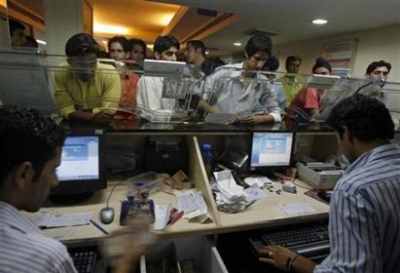
Analysts, however, said the timing of the infusion was good.

Plan to lay off excess staff, trim salaries of top executives.

For the current fiscal which ends on March 31, it put the real GDP estimate at 5 per cent. It estimated a 7 per cent growth in 2022-23 and 2023-24 fiscal years. The inflation rate was seen moderating to 4.4 per cent in the next fiscal from 4.7 per cent in the current.
India was already in the midst of a protracted economic slowdown before the virus hit due to a festering crisis among shadow lenders and declining consumer demand and private investment. Service sector activity in India is still effectively on hold.

Embattled Sri Lankan President Gotabaya Rajapaksa had declared a state of emergency with effect from May 6 midnight, the second time in just over a month amidst growing countrywide anti-government protests over the economic crisis.

The Indian economy remains on track to regain its position as the world's fastest-growing major economy after official estimates on Friday put the expansion at a tempered 9.2 per cent this fiscal amid concerns over the impact of a resurgent virus on the fragile recovery. The growth in the gross domestic product (GDP) of 9.2 per cent in April 2021 to March 2022 fiscal (FY 2021-22) given by the National Statistical Office (NSO) in its first advance estimate compares with 9.5 per cent expansion forecast by the Reserve Bank of India (RBI) last month. The economy had contracted by 7.3 per cent in the previous financial year.
'China's investment destination image the world over has taken a beating, therefore investors feel India is a safe haven for investments.' 'FDI is at an all-time high in India.' 'Now after such poor ratings, this FDI amount will fall.' 'Therefore, I am saying these things are happening at China's behest.'
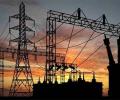
As Mumbai's real estate and electric vehicle penetration grows, two of the city's private power distribution companies, Adani Electricity and Tata Power, are eyeing a bigger business pie, particularly betting on high-value customers. Adani Electricity Mumbai (AEML), the subsidiary which houses Adani Energy Solutions' Mumbai distribution business, recorded a six per cent growth in total units sold in the financial year 2023-24 (FY24), the company's presentation shows. This gain came at over 13 per cent growth in the year-ago period.

'Rhetoric and chest-thumping are running high on India's recent growth record.'
'But will the giant waves developing elsewhere allow us to sail smoothly into fair winds?' asks Debashis Basu.

Moody's downgraded local currency bank deposit ratings.

Corporate India is starting to step up its capital expenditure plans amid government incentives and signs of rising demand, company executives and analysts have indicated. This coincides with the Reserve Bank of India (RBI) recently citing a double-digit growth in private capital expenditure. Healthy balance sheets of banks and corporates, along with increasing capacity utilisation and improving business sentiment, are contributing to a favourable environment for sustained growth in private sector investments, the RBI said in its policy last week.

'Brexit might delay the sale process of Tata Steel's UK operations'.

the ratings agencies have been inconsistent in their treatment of China and India. Given this record -- what we call Poor Standards -- my question is: why do we take these rating analysts seriously at all?," Chief Economic Adviser Arvind Subramanian said on Thursday.

The broad contours of their assignment are expected to be making independent assessment of recovery prospects, and estimating haircuts for restructuring cases.

India on track to be third largest consumer economy by 2025.

Among the Sensex firms, ITC, State Bank of India, Bajaj Finance, NTPC, Power Grid, ICICI Bank, Kotak Mahindra Bank and UltraTech Cement were the major laggards. IndusInd Bank, Tata Consultancy Services, Axis Bank, Mahindra & Mahindra, Tata Motors, HCL Technologies, Asian Paints, Wipro, HDFC and Maruti were among the major gainers.
Credit rating agencies have been raising red flag over high debt to GDP ratio of India.

But, the Wall Street Journal said that the US labour market is operating with millions fewer jobs than in February, the month before the coronavirus pandemic struck the country's economy.

India's macroeconomic situation is improving fast and the country's GDP growth will turn positive in the third and fourth quarters of the current financial year, eminent economist Ashima Goyal said on Sunday. Goyal in an interview to PTI said the management of the COVID-19 pandemic and gradual unlocks announced by the government have helped in avoiding multiple COVID-19 peaks. The growth estimates by different agencies are being continuously revised, she said.

Finance Ministry is expecting a rating upgrade by credit agencies by the year-end on the back of policy initiatives.

While the collapse of a large financial intermediary can wreak havoc on the system because of the interconnectivity, a large business conglomerate too can play spoilsport if the banks have too much exposure to the entity, explains Tamal Bandyopadhyay.

The ratings agency, in a report, said 'the Reserve Bank of India's deferral of the Basel 3 implementation deadline by a year has eased the pressure on banks to issue hybrid Tier 1 capital in FY15.'

S&P expects India to grow at 7.4 per cent in 2015, similar to the central bank's forecast for the fiscal year ending in March.

Online travel portals and airlines say the demand from companies is being led by essential services sectors like pharmaceutical, oil and gas, and power.

Stating that India's consolidated deficit is the highest among the G20 nations, Gopinath added it is important for India to undertake reforms.

For the consumer, there would be practically no impact on prices of essential medicines this year.

On Tuesday, Economic Affairs Secretary Arvind Mayaram told reporters that economic growth this financial year would be over five per cent and the numbers in the second quarter would be better than the first quarter which yielded gross domestic product expansion of 4.4 per cent, a four-year low.

In a proposal to FinMin, the Banks Board Bureau suggests asset sales to PSUs within a deadline to recover bad loans.

With the world's worst outbreak of COVID pandemic stalling a nascent economic recovery, the government has begun assessing the impact of the second wave of infections on different sectors and may look at providing support at an appropriate time to segments requiring fiscal help. Some of the economic indicators, including the Goods and Services Tax (GST) collections, still provide confidence and incoming data will throw some more light on the state of the economy, sources said. Services sectors like hospitality, tourism and aviation which had just started recovering were hit hard by the second wave of COVID, the sources said, adding these segments might need some support on an urgent basis from the government.

'India is nowhere near the peak of the infection given its large population of 1.3 billion'

CARE Ratings, in a report, said it foresees an increase in the retail prices of petrol and diesel in the coming few days, depending on how the oil markets react in the reduction in supply from the cartel.

Jaitley's fiscal arithmetic, Crisil said, is "shaky", and the scope for fiscal slippage "remains high".

US private equity firm I Squared Capital is dropping out of the race to buy India's second-largest state oil firm, Bharat Petroleum Corporation Ltd (BPCL) owing to a complex deal structure and lack of financial backers for the transaction, sources said. I Squared Capital through its Indian arm, Think Gas was among the three suitors that had evinced interest in buying the government's near 53 per cent shareholding in BPCL. "The company has made a decision not to participate in the financial bidding," a source with direct knowledge of the development said.
